MicroSims
A MicroSim is a small interactive simulation built around a single idea. Each
one lives at docs/sims/<name>/ and is embedded in the chapter it belongs to,
but every sim also works on its own — click any card below to open it full
size.
All 22 are implemented and live. Twenty-one are embedded in a chapter; the Learning Graph Viewer stands alone as a map of the whole book.
Catalog
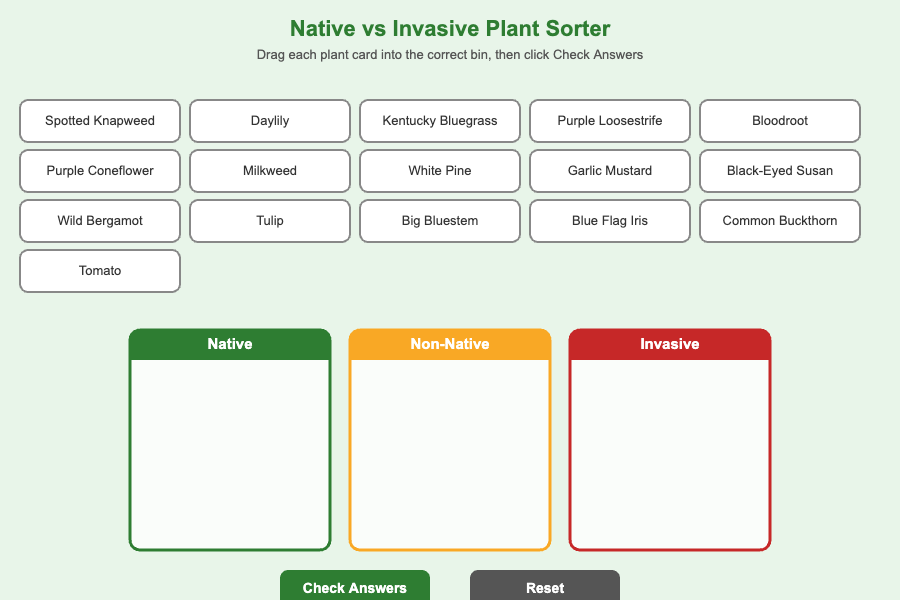
Native vs Invasive Sorter
Drag Minnesota species into three bins — native, non-native, invasive — then check your answers. Practice for the decision tree in Chapter 1.
Chapter 1
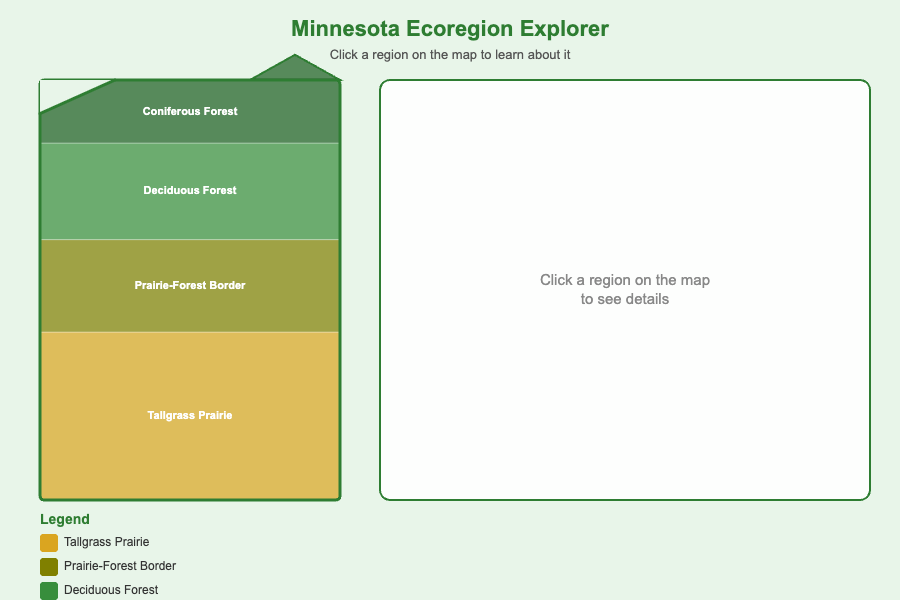
Minnesota Ecoregion Explorer
Click any region of the state to see its climate, soils, and characteristic plant community, from tallgrass prairie to boreal forest.
Chapter 2
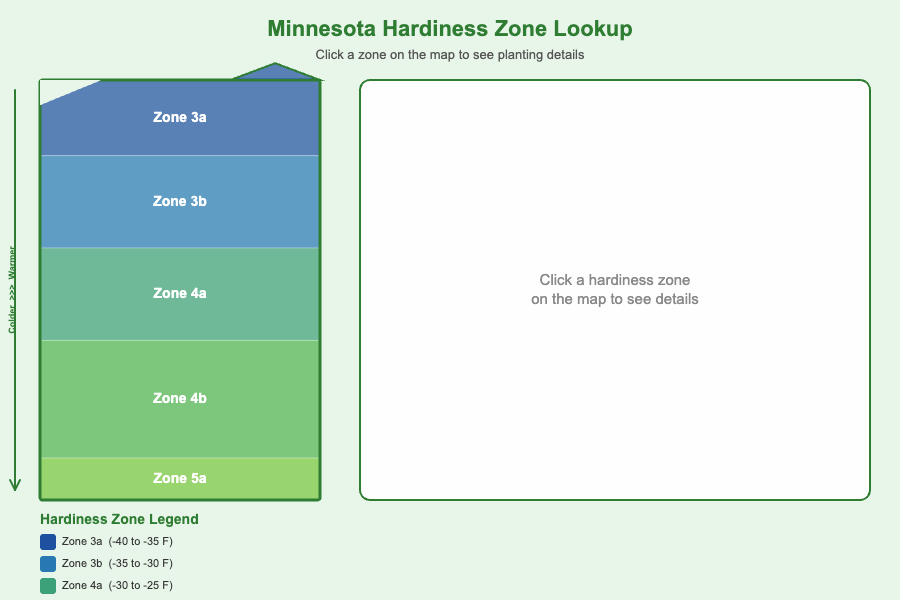
Hardiness Zone Lookup
Click your part of Minnesota to find your USDA zone, from 3a in the far north to 5a in the southeast, and what that means for plant choice.
Chapter 2
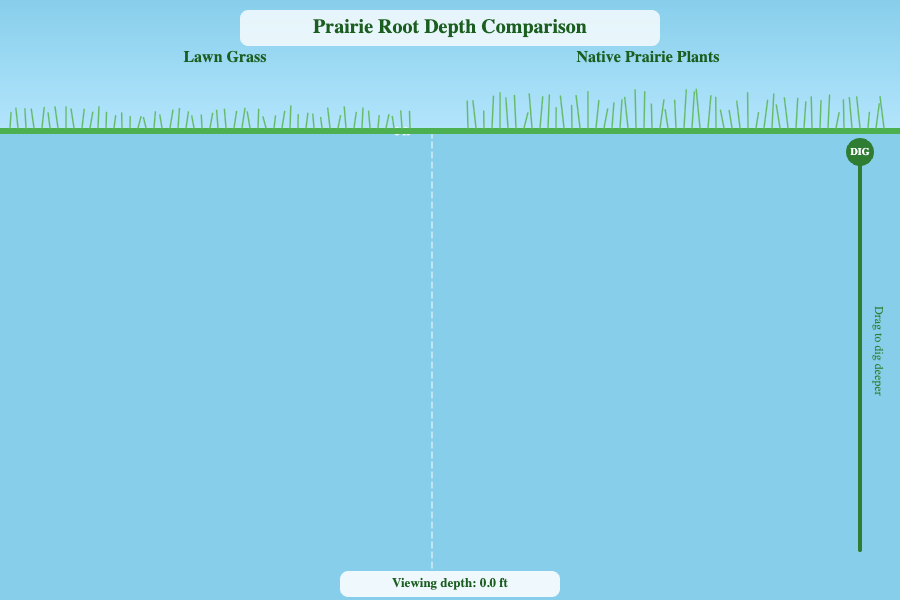
Prairie Root Depth Comparison
Drag the depth slider to compare lawn grass roots against native prairie roots. The single most persuasive image in the book.
Chapter 3
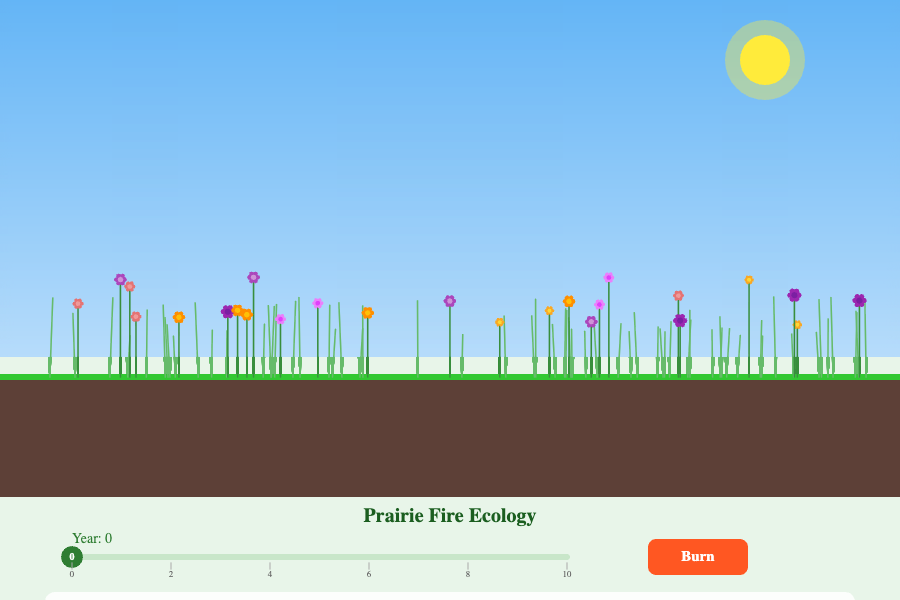
Prairie Fire Ecology Simulator
Burn a prairie and watch what happens over the following years. Shows why fire builds prairie rather than destroying it.
Chapter 3
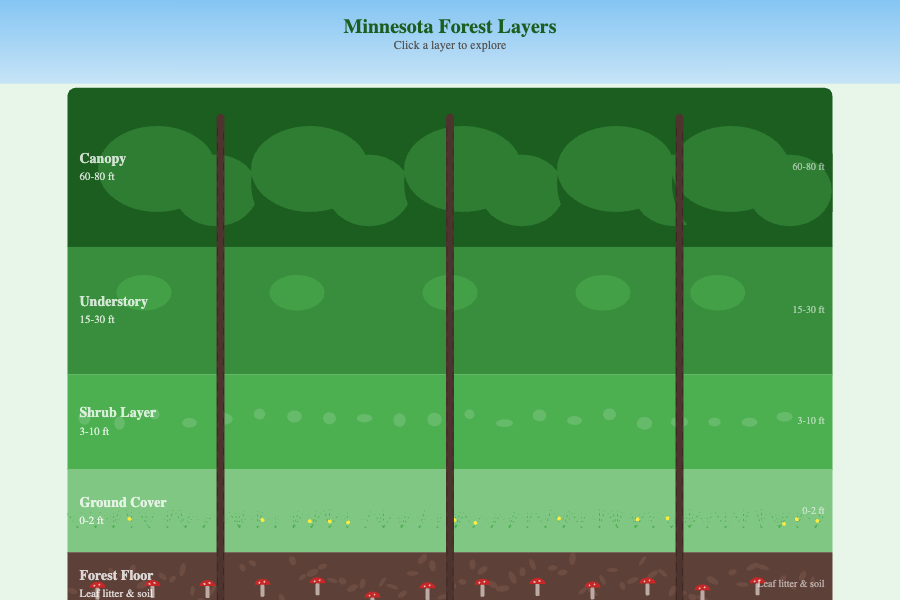
Minnesota Forest Layers
Click through canopy, understory, shrub layer, and ground cover to see which species occupy each level and how much light reaches it.
Chapter 4
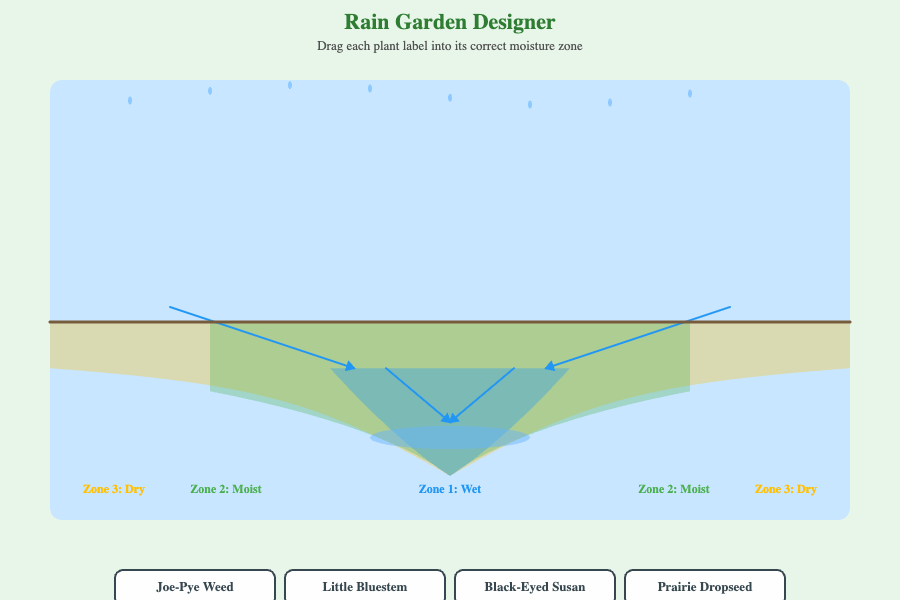
Rain Garden Designer
Drag plants into the right moisture zone of a rain garden cross-section — basin, slope, or upland edge.
Chapters 5, 10
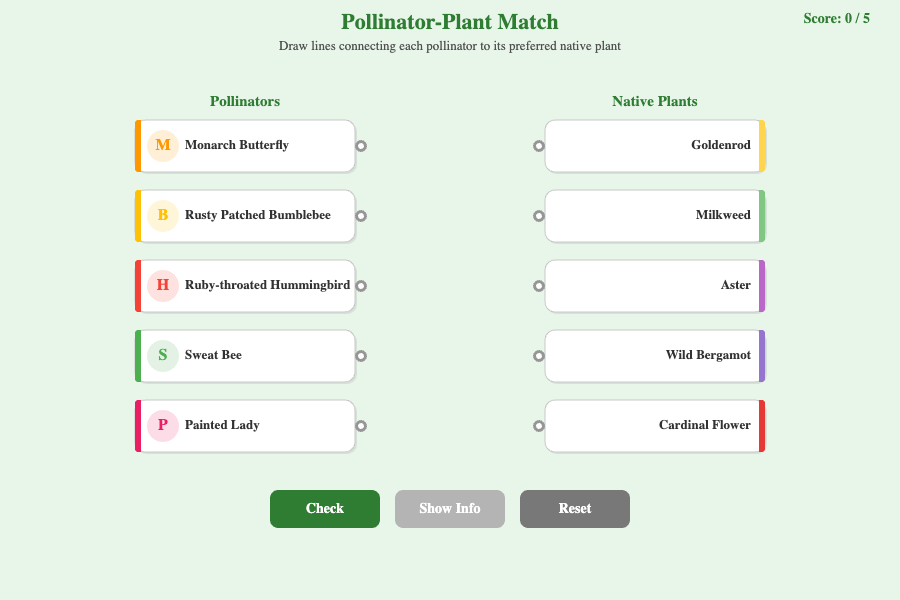
Pollinator-Plant Match
Draw lines connecting each pollinator to the native plant it depends on. Specialist relationships are stricter than most people expect.
Chapter 6
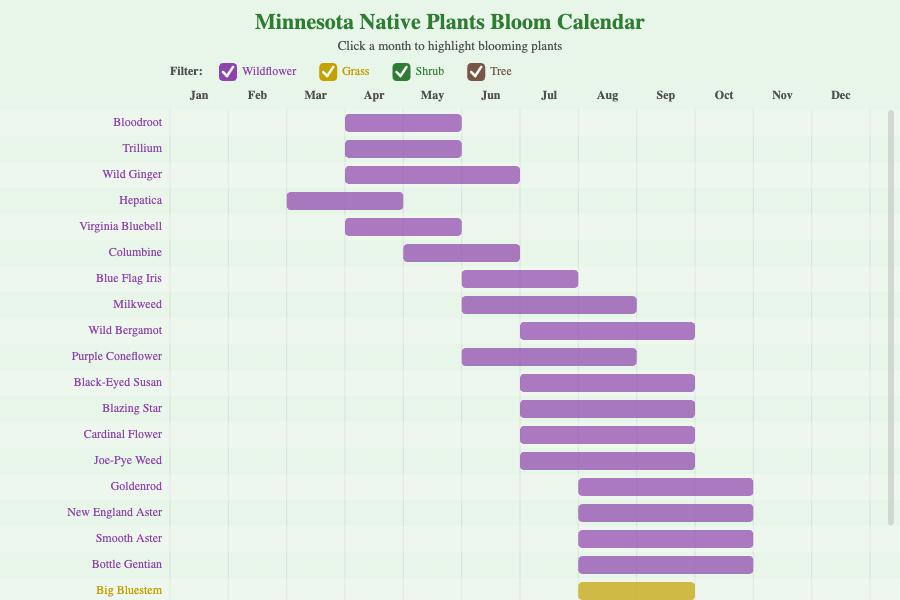
Bloom Calendar
A month-by-month bloom chart for Minnesota natives. Highlight any month to find the gaps in your own planting.
Chapters 6, 10
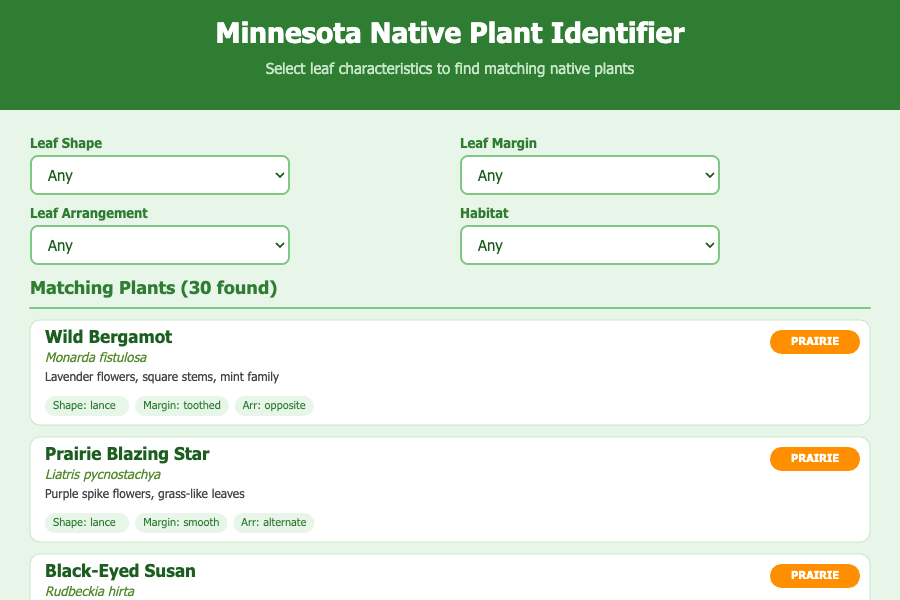
Native Plant Identifier
Pick leaf shape, margin, arrangement and habitat, and narrow 30 native species down to the ones that match.
Chapter 7
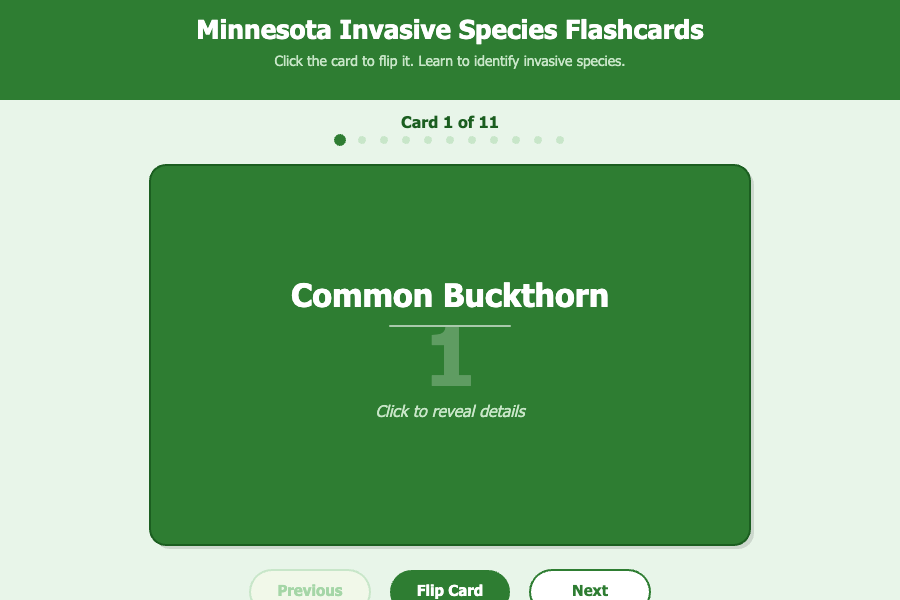
Invasive Species Flashcards
Eleven cards covering Minnesota's worst invaders. Flip each one for the field marks that separate it from look-alikes.
Chapter 8
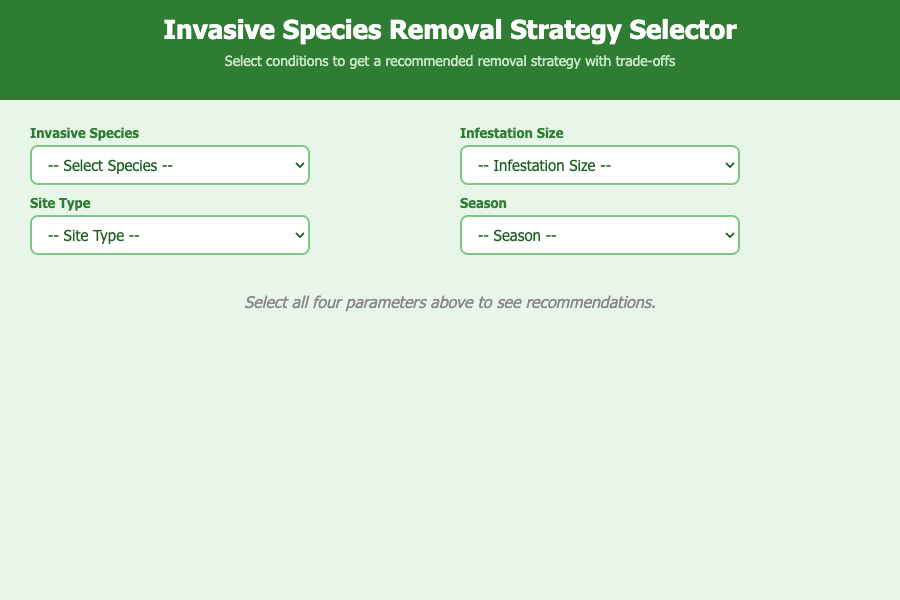
Removal Strategy Selector
Choose species, infestation size, site type and season to get a removal method with its real trade-offs.
Chapter 9
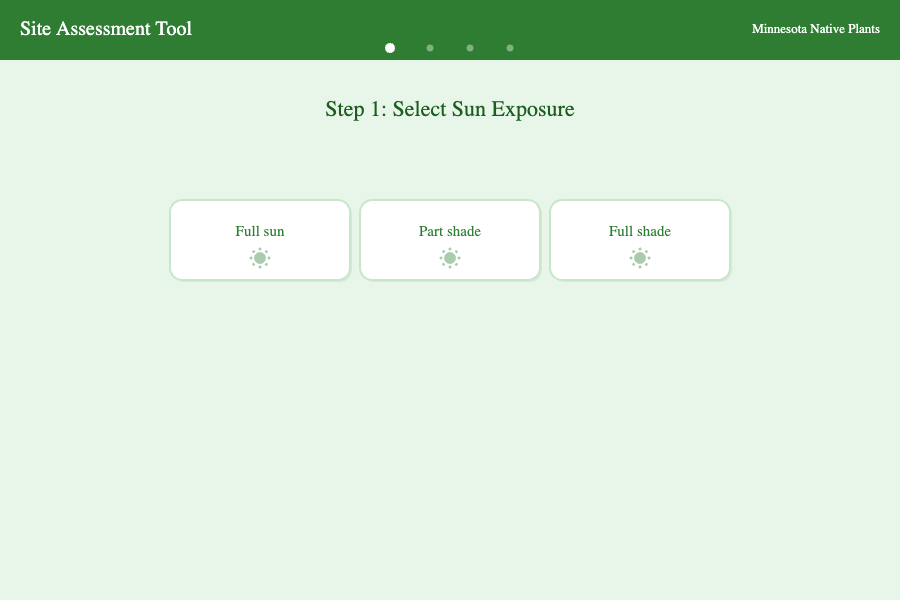
Site Assessment Tool
Walk through sun, moisture, and soil for your own yard, and get a plant list that fits what you actually have.
Chapter 10
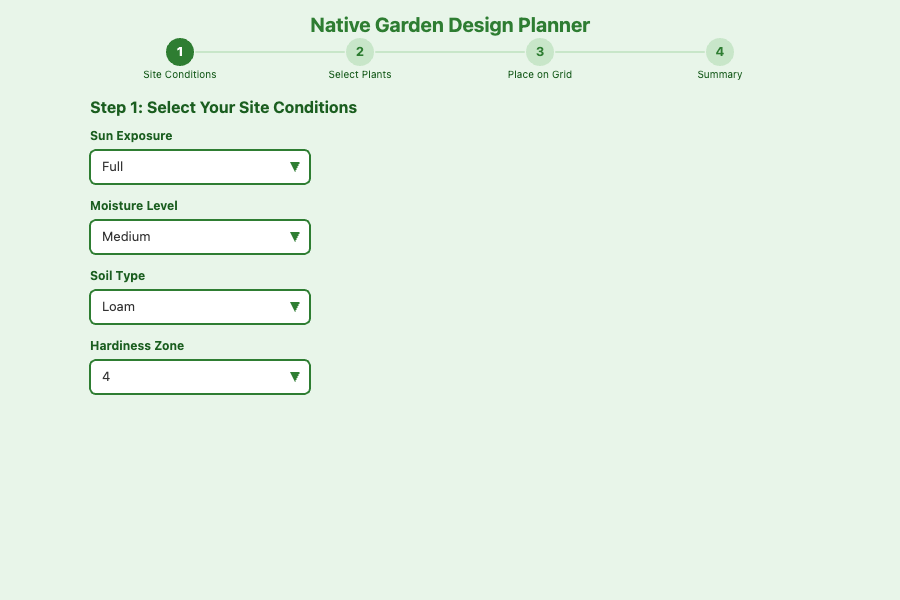
Native Garden Design Planner
A four-step planner: site conditions, plant selection, placement, then a summary you can work from.
Chapters 10, 17
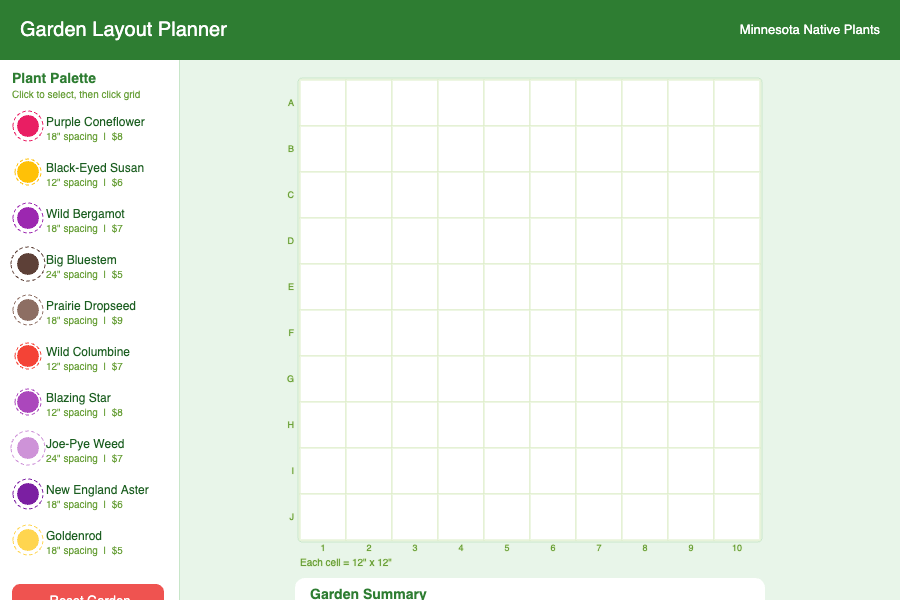
Garden Layout Planner
Place plants on a scaled grid at their correct mature spacing and see how the bed fills in.
Chapter 10
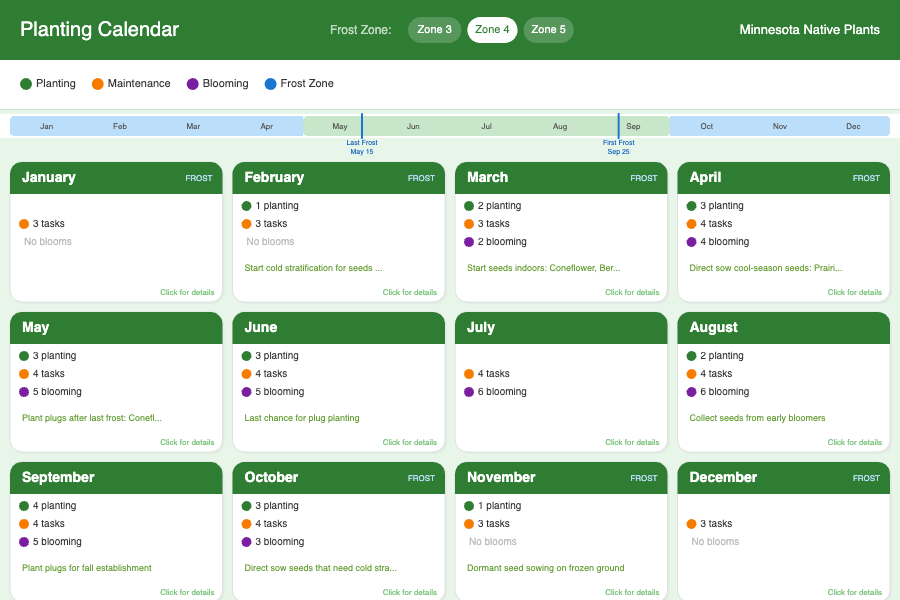
Planting Calendar
What to do each month in a Minnesota native garden — planting, maintenance, blooming, and frost dates by zone.
Chapter 11
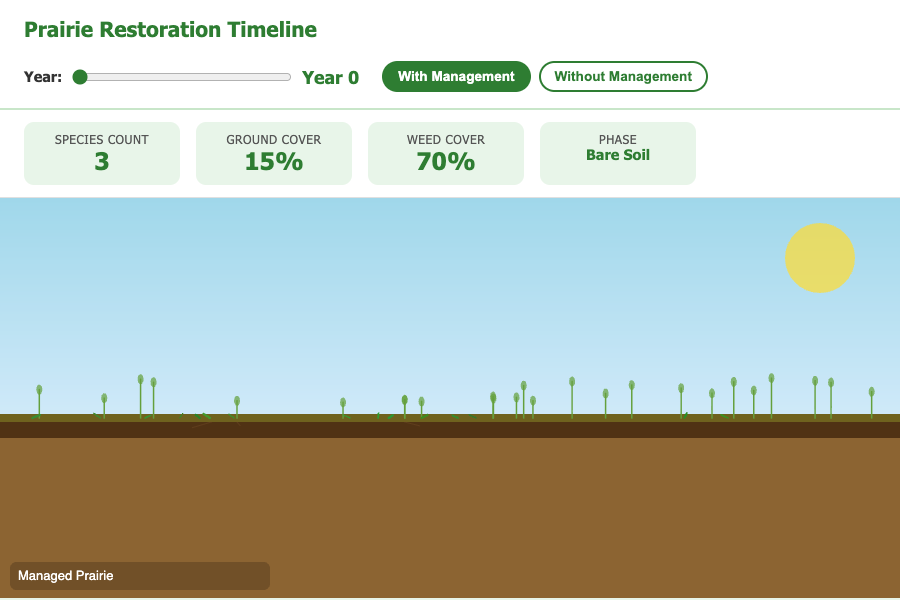
Prairie Restoration Timeline
Run a restoration year by year, with and without management, and watch species count, ground cover and weed pressure change.
Chapter 12
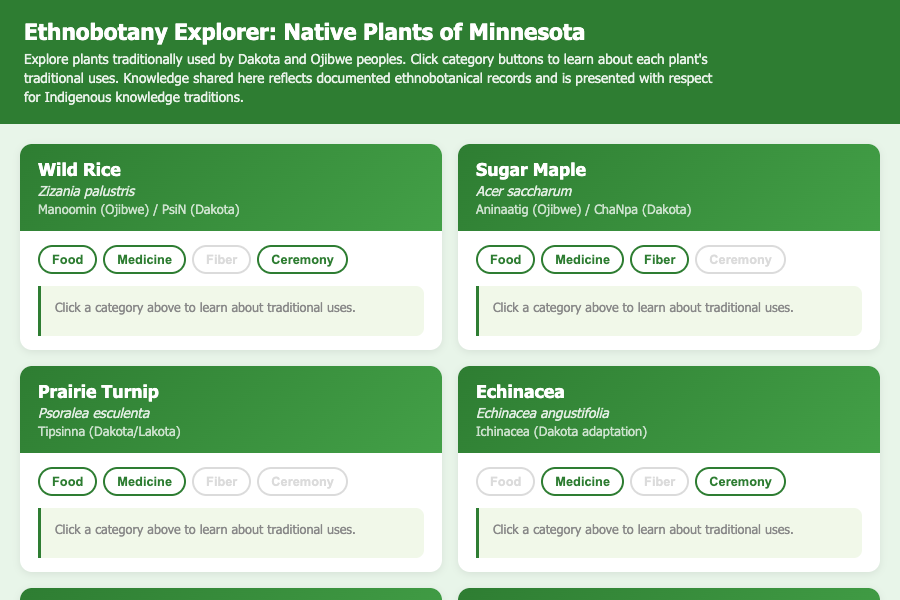
Ethnobotany Explorer
Plants traditionally used by Dakota and Ojibwe peoples, organised by food, medicine, fiber and ceremony, from documented sources.
Chapter 13
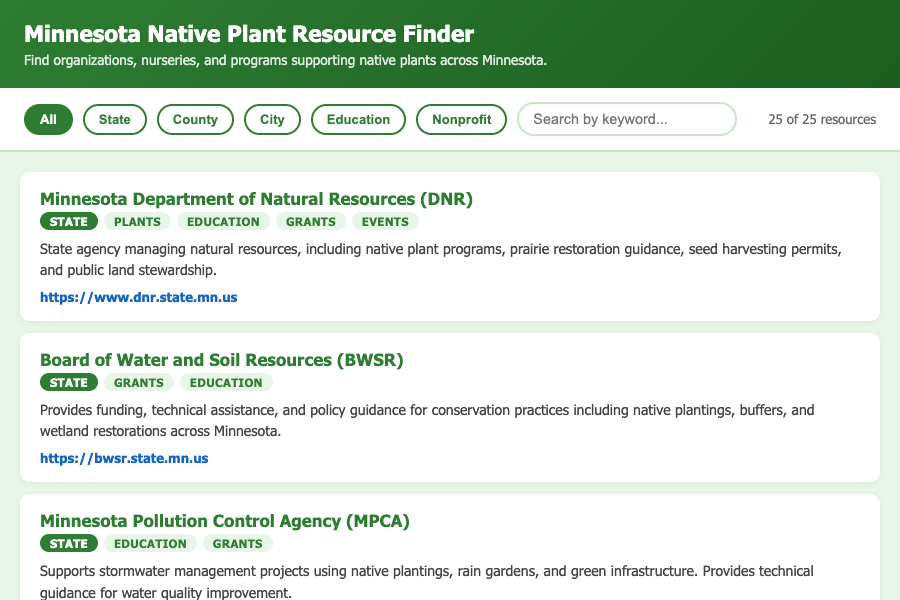
Native Plant Resource Finder
Twenty-five Minnesota organizations, nurseries and programs, filterable by type and searchable by keyword.
Chapter 14
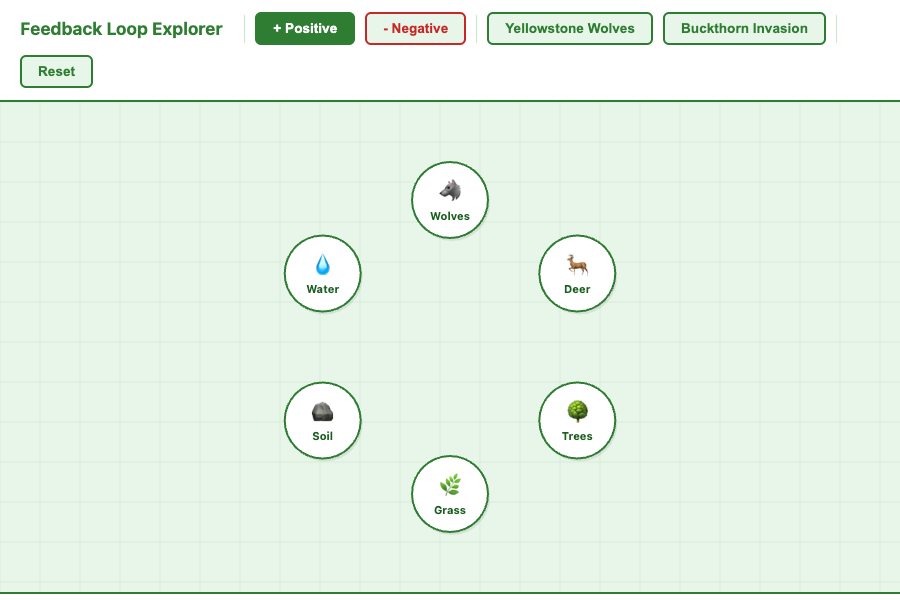
Feedback Loop Explorer
Trace reinforcing and balancing loops through real cases — Yellowstone wolves, buckthorn invasion — as a systems diagram.
Chapter 15
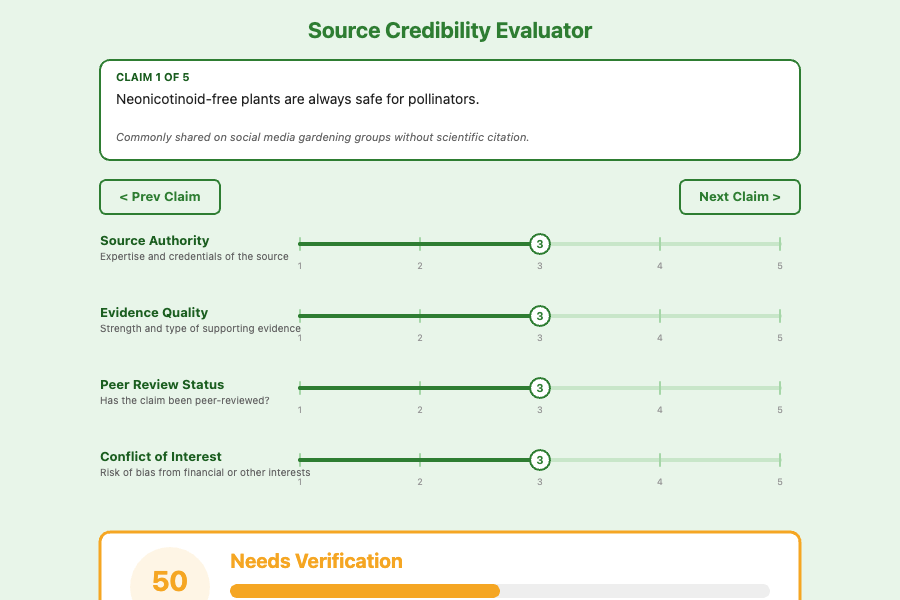
Source Credibility Evaluator
Score five real plant claims on authority, evidence, peer review and conflict of interest, then see how your score compares.
Chapter 16
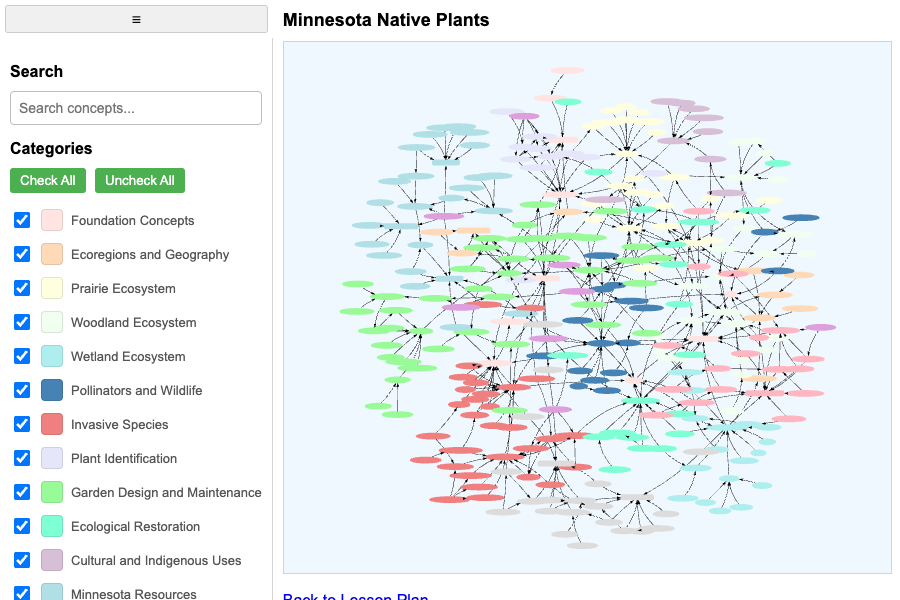
Learning Graph Viewer
All 289 concepts in this book and the 446 dependencies between them, colored by category and searchable.
Whole book
Using These in a Classroom
Every sim runs entirely in the browser with no login, no data collection and no server. To embed one in your own course page, copy the iframe line from that sim's page — for example:
1 2 | |
They are licensed CC BY-NC-SA 4.0 along with the rest of the book, so you are free to use and adapt them for non-commercial teaching with attribution.